
Prime Minister Narendra Modi, addressing the nation from the Red Fort on Independence Day, declared that India is undergoing a rapid transformation across various sectors and is firmly on track to become a developed nation by 2047.

'Improved law and order and transparent governance have helped change UP's investment image.'

Merlinhawk Aerospace has partnered with Boeing India Defence to provide in-country maintenance, repair, and lifecycle support for advanced Electro-Optical/Infrared (EO/IR) systems on Indian military platforms. This collaboration aims to strengthen local support, reduce turnaround times, and enhance mission readiness for the Indian Navy, aligning with India's self-reliance goals in defence.
Merlinhawk Aerospace has partnered with Boeing India Defence to provide in-country maintenance, repair, and lifecycle support for advanced Electro-Optical/Infrared (EO/IR) systems on Indian military platforms. This collaboration aims to strengthen local support, reduce turnaround times, and enhance mission readiness for the Indian Navy, aligning with India's self-reliance goals in defence.

'The Indian private space sector is no longer a high-risk bet; it is a highly bankable, globally competitive asset class capable of easing the global small satellite launch bottleneck.'
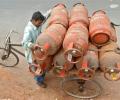
Researchers at CSIR-NCL have developed a technology for producing dimethyl ether (DME) as an alternative to liquefied petroleum gas (LPG), potentially reducing India's reliance on imports and enhancing energy security.

Over 14,000 members of the academic and scientific community have petitioned Lok Sabha Speaker Om Birla, seeking intervention against Congress MP Priyanka Gandhi Vadra's "gau mutra expert" remark concerning IIT Madras Director V Kamakoti during parliamentary proceedings. The petition calls for the withdrawal of the derogatory expression, arguing it undermines the dignity of an eminent scientist and the institution he leads, and urges for respectful democratic discourse.
India is adopting a two-pronged strategy for artificial intelligence development, focusing on open-source models and indigenous innovation to counter global access restrictions on advanced AI technologies. The government aims to support local developers and ensure AI creates tangible economic impact across various sectors, rather than being solely driven by market speculation.
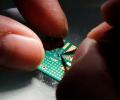
The Finance Ministry's expenditure department has approved a substantial Rs 1.25 lakh crore outlay for India Semiconductor Mission 2.0, significantly increasing the country's investment in global chip-making ambitions and aiming to establish India as a major semiconductor hub.

Indian startup funding plummeted by 43 per cent year-on-year to $7.81 billion between March 1 and June 15, 2026, largely due to the West Asia conflict, which has amplified global risk perceptions, tightened liquidity, and led to rupee depreciation, making global investors cautious.
Chief Justice of India Surya Kant stated that the Supreme Court views technology as an aid to human reasoning, not a replacement, and emphasised developing "Swadeshi Jurisprudence" tailored to India's unique conditions. He highlighted efforts to create an indigenous AI ecosystem for the judiciary and stressed that AI cannot substitute human judgment, empathy, or ethical discernment.

'The focus will be on showing the real-world impact of AI in improving the lives of citizens and how it has helped in ensuring democratic access to technology for everyone.'

At the heart of the decision is concern over the survival of Meghalaya's neighbourhood retailers.

The Biotechnology Industry Research Assistance Council (BIRAC) has chosen seven to eight biotechnology startups as the initial group to receive funding from the government's ~1 trillion Research, Development and Innovation (RDI) Fund, with an average investment of approximately ~25 crore per startup.

Karnataka is rolling out the first batch of 2,000 indigenously developed AI-ready KEO PCs, priced at Rs 18,999, to rural libraries and educational institutions. This initiative aims to extend artificial intelligence and digital literacy beyond urban centres, supporting students with AI skills, spoken English, and competitive exam preparation, even in areas with limited internet connectivity.

'With this deal, we may see even 50 launches a year within the next few years.'

The appointment comes as Agnikul prepares for Mission 02, a flight that will attempt, for the first time on Indian soil, the recovery of an orbital-class rocket booster and the extension of a rocket's upper stage into an on-orbit platform.

Olectra Greentech Ltd has become the first company in India to deploy 4,000 electric buses on Indian roads, marking a significant milestone in the country's transition to sustainable public transport and reinforcing its leadership in electric mobility.
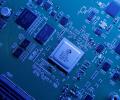
The Indian government has approved two major manufacturing initiatives worth nearly Rs 1.9 lakh crore (USD 22 billion) to expand the country's semiconductor ecosystem and scale up mobile phone production, aiming to strengthen its position as a global electronics manufacturing hub.
Indian researchers from ICMR-National Institute for Research on Women's Health and IIT Bombay have developed an indigenous "placenta-on-chip" platform. This microphysiological system mimics the human placental barrier, reproducing essential functions like hormone production and nutrient transfer. It offers a simple, scalable tool for studying placental biology, pregnancy complications, and drug effects, aiming to reduce reliance on animal experimentation.

The next-generation missile is expected to be substantially smaller and lighter than the current BrahMos, which weighs around 3 tonnes. The reduction in weight could allow fighter aircraft to carry more missiles per sortie, enhancing combat effectiveness.

Sarvam AI, an Indian full-stack sovereign artificial intelligence company, has achieved unicorn status after raising $234 million in a Series B funding round led by HCLTech and Bessemer Venture Partners, with HCLTech acquiring a 10.46 per cent stake.
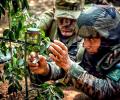
The Defence Research and Development Organisation (DRDO) has transferred seven technologies developed under the Technology Development Fund (TDF) scheme to the armed forces, enhancing indigenous defense capabilities.

A parliamentary panel has strongly recommended that the Indian government appoint a dedicated 'polar ambassador' to enhance its strategic engagement and diplomatic influence in the critical Arctic and Antarctic regions, aligning with global trends and India's growing focus on polar affairs.

Lieutenant General Seth's involvement in the army's capability development and modernisation efforts is evident from the key appointments he has held in the Strategic Planning and Capability Development Directorates, including Colonel Capability Development for Mechanised Forces, Brigadier Perspective Plans and Acquisition, and Additional Director General Capability Development.

Army Chief General Upendra Dwivedi emphasized the importance of indigenous equipment for the Indian Army, highlighting the force's modernization efforts and readiness for future warfare.

Successful interceptor, anti-ship, MIRV and hypersonic technology tests have strengthened India's position among a select group of advanced missile powers.

'DRDO has been directed to license missile technologies to the private sector.'

Prime Minister Narendra Modi on Sunday used two major public engagements in Kolkata to outline a broader vision for India's future -- one rooted in inner balance and collective well-being through yoga, and the other in national self-reliance and maritime strength.

Kalyani Strategic Systems' subsidiary, Agneyastra Energetics Ltd, has commenced construction of a Rs 1,500-crore defence manufacturing facility in Andhra Pradesh, aiming to enhance India's indigenous defence capabilities and generate employment.

The Defence Research and Development Organisation (DRDO) and the Indian Air Force (IAF) have successfully conducted flight tests of the RudraM-II air-to-surface missile, marking a significant milestone in indigenous defence technology.

Experts' worries intensified after Pakistan commissioned its first Chinese-built Hangor-class submarine, PNS Hangor, last month.
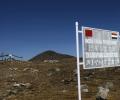
Arunachal Pradesh Governor K T Parnaik has urged young people to connect with others from across India, preserve traditional values, and work to eliminate regional barriers through interaction and mutual respect.

India's 500 MWe Prototype Fast Breeder Reactor (PFBR) at Kalpakkam in Chennai has achieved first criticality, marking a significant advancement in the country's nuclear energy capabilities and long-term energy security.

From Dr A P J Abdul Kalam to Sourav Ganguly, these coming biopics are bringing some of India's most fascinating lives to the big screen.

The government on Thursday restored liquefied petroleum gas (LPG) supplies to commercial consumers such as hotels, restaurants and other businesses to pre-crisis levels, and lifted sector-specific restrictions imposed during the recent West Asia conflict, in a sign that energy supply concerns are easing as global markets stabilise.

A lesson for India is to clearly define objectives beforehand, so that the adversary or other parties do not attempt to mitigate them midway.

'Why not aspire for 8 or 9 or even 10 per cent?'

Three milestones in three days signal India's growing mastery in next-generation strategic technologies spanning nuclear deterrence, hypersonic propulsion and precision stand-off strike capability.
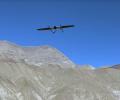
The 515 Army Base Workshop in Bengaluru has signed multiple strategic MoUs to bolster indigenous drone manufacturing and ecosystem resilience, marking a significant step towards modernisation and self-reliance in unmanned systems.
